Regulations · 6 min read
Ley 6/2025 on holiday lets in the Canary Islands: what changes
Updated on 12 November 2026 · Canarias Property Inmobiliaria
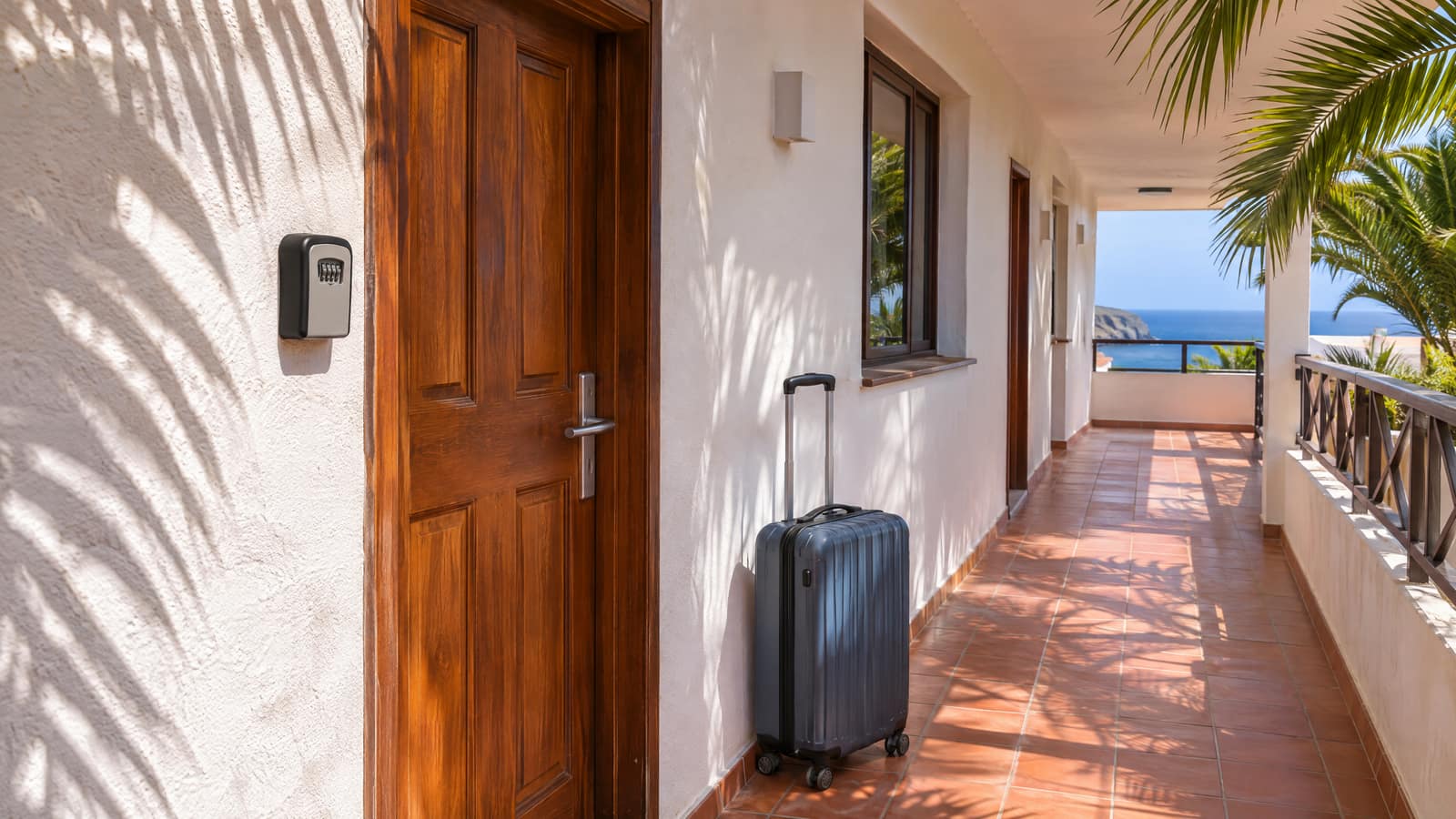
Since 13 December 2025, a home in the Canary Islands can only be used as a vivienda vacacional (the islands' holiday-let licence category) if the planning rules of its municipality expressly allow it. Homes that were already registered can carry on, but with specific deadlines and formalities. The law has been amended twice in 2026, most recently by a decree-law published on 11 November.
What Ley 6/2025 is and which version is in force
Ley 6/2025, de 10 de diciembre, de ordenación sostenible del uso turístico de viviendas (the Canary Islands law on the sustainable regulation of the tourist use of homes) was published in the BOC, the Canary Islands official gazette, on 12 December 2025 and came into force the following day.
It has already been amended twice. Ley 7/2026, of 31 July (in force since 15 August 2026), added, among other things, the presumption that stays of up to 31 days are tourist lets. Decreto ley 10/2026, of 9 November, extended deadlines and set the minimum safety requirements. The latter has applied since 12 November 2026, with effect from 13 December 2025.
Who can register a new vivienda vacacional
The fundamental change is in article 3: residential use does not in itself allow letting to tourists. The municipal planning rules must expressly permit it, and the town council must reserve at least 90% of the residential building capacity for housing (article 4).
Registration is made by filing a declaración responsable (sworn declaration) with the cabildo insular (the island council). It is valid for five years and is renewed with a further declaration in the month before it expires (article 10).
If the town council has not adapted its planning rules within five years, default rules apply: detached single-family homes only, and guest places up to 10% of the inhabitants of each settlement.
- Minimum age of the home: ten years (article 5).
- It must not have been subsidised housing (vivienda protegida) in the last ten years.
- A planning certificate (cédula urbanística) confirming that the planning rules allow tourist use of that home.
What happens to holiday lets that already existed
Homes registered under Decreto 113/2015 have three options, all with deadlines.
If you choose none of them, the general regime lets you continue for five years, until December 2030, after which the activity lapses. If you operate a home that belongs to someone else, the registration ends when your contract with the owner ends.
- Established tourist use: for anyone who is both the owner and the holder of the registration, with more than one year of uninterrupted activity before the law. It is applied for at the town council before December 2030 and is not subject to the five-year limit. In return, the home cannot have any residential use and the right is lost if it is sold. In inheritances, the heir may continue for up to ten years.
- Extension: a single extension of up to five more years. It is requested from the cabildo within the first four years, and you have to show that the general period does not make up for the loss of the registration.
- Offsetting: up to twenty years in exchange for putting another home on the long-term rental market.
- Outstanding formality: anyone who did not at the time file the prior notification of a classified activity with the town council may do so until 31 December 2027. If they do not, they may continue for five more years from that date and will then have to stop.
Requirements for the home
Until implementing regulations are in place, the seventh transitional provision applies.
For the classified-activity notification, the technical report must confirm, as a minimum, a smoke detector, a fire extinguisher and evacuation signage.
- Minimum usable floor area of 35 m². The minimum habitable floor area is accepted if the home meets one additional condition from the list in the law (private parking, a swimming pool or energy class A or B, among others).
- Two full bathrooms for more than four guest places and three for more than eight.
- Minimum energy rating of F in buildings existing on 31 December 2007 and D in later ones.
- Hot water from solar panels or another renewable energy source where possible.
Owners' association: permission comes first
Since 3 April 2025, article 7.3 of the Ley de Propiedad Horizontal (Spain's Horizontal Property Act) has required the express approval of the owners' association to be obtained beforehand. Article 17.12 requires the vote of three fifths of the owners and of the ownership shares.
The Canary Islands law reinforces this: the activity cannot be carried on if the building's deed of constitution, its statutes or a resolution of the owners' meeting prevents it. A certificate from the owners' association is attached to the declaración responsable.
Registration number: the Canary Islands one stays, the national one is annulled
The number from the Registro General Turístico de Canarias (the Canary Islands tourism register) must appear in any advertisement for the home, including on platforms (article 8.6).
The national Registro Único de Arrendamientos (single rentals register) under Real Decreto 1312/2024 is something else. In May 2026 the Supreme Court annulled its registration procedure and the obligation to register with the Registro de la Propiedad (Land Registry) to obtain a number. Before paying for that formality, check the consolidated text in the BOE, Spain's official state gazette.
Penalties
Ley 7/1995 on tourism in the Canary Islands sets fines of up to €1,500 for minor infringements, from €1,501 to €30,000 for serious ones and from €30,001 to €300,000 for very serious ones.
Advertising the home without a registration number, or marketing tourist stays without meeting the requirements, is a very serious infringement. Falsifying essential information in the declaración responsable means you have to stop, and may bar you from filing another for up to three years.
Real alternatives: temporary and long-term lets
Stringing together short contracts without a tourist registration no longer works. Since August 2026, any stay of 31 days or fewer is presumed to be a tourist let, as is any stay advertised through tourist accommodation channels. The landlord must ask the tenant for the reason for the temporary stay and record it in the contract. If the contract does not record it, that is a serious infringement.
At national level, Real Decreto-ley 29/2026 defines the temporary letting of a home: more than 31 days, as a general rule up to twelve months, and with a justified reason. It has been in force since 8 October 2026 and, at the date of this article, the BOE does not yet record its ratification by parliament.
When a home is let as a main residence, the tenant can extend for up to five years, or seven if the landlord is a company.
Frequently asked questions
Can I carry on letting my holiday home in the Canary Islands?
Yes, if it was registered before 13 December 2025. The general period is five years, until December 2030, unless you obtain established tourist use, an extension, or offsetting through a long-term let.
Can a new vivienda vacacional be registered in Tenerife?
Only if the municipality's planning rules expressly allow tourist use of that home and the requirements of the law are met. Check with the town council before buying.
What happens to the holiday-let licence if I sell the flat?
The declaration of established tourist use ceases to have effect when the home is sold. Only in inheritances may the new owner continue, for a maximum of ten years.
What is the fine for letting to tourists without being registered?
Marketing tourist stays without meeting the requirements, or advertising without a registration number, is a very serious infringement: from €30,001 to €300,000 under Ley 7/1995.
Sources
- BOE: Ley 6/2025, de 10 de diciembre, de ordenación sostenible del uso turístico de viviendas (BOE-A-2025-26358)
- BOC no. 163, 14 August 2026: Ley 7/2026, de 31 de julio (eleventh final provision, amendment of Ley 6/2025)
- BOC no. 226, 11 November 2026: Decreto ley 10/2026, de 9 de noviembre, de medidas urgentes en materia de actividades clasificadas
- BOE: Ley 7/1995, de Ordenación del Turismo de Canarias, consolidated text (articles 75 to 79)
- BOE: Ley 49/1960, de Propiedad Horizontal, consolidated text (articles 7.3 and 17.12)
- BOE: Real Decreto 1312/2024, Registro Único de Arrendamientos, consolidated text showing the annulled provisions
- BOE: Judgment of 19 May 2026 of the Third Chamber of the Tribunal Supremo on Real Decreto 1312/2024 (BOE-A-2026-12300)
- BOE: Ley 29/1994, de Arrendamientos Urbanos, consolidated text (articles 2, 5, 9 and 9 bis)
- BOE: Real Decreto-ley 29/2026, de 6 de octubre (BOE-A-2026-20823)
General information, reviewed on 12 November 2026. It is no substitute for legal or tax advice on your own case.